The Power of the Posterior Chain: Why Training Your Back Body Is the Secret to a Strong, Sculpted, Magnetic Physique
On posture, presence, and the quiet architecture of an attractive body.
There's a certain quality to a body that's been trained well.
It's not about size. It's not about leanness. It's not even, really, about strength in the way we tend to think of it. It's something subtler — a way of standing. A way of moving. A presence that reads as upright, capable, magnetic before a single word is spoken.
That quality almost always comes from the same place: a strong, well-developed posterior chain.
In a world that trains the body from the front — endless crunches, mirror muscles, quad-dominant workouts, hours hunched over screens — the back body has become quietly neglected. And with it, we've lost something essential: the architecture of an attractive, athletic, well-aligned physique.
This post is about reclaiming it.
What Is the Posterior Chain?
Your posterior chain is the network of muscles that runs along the back of your body — the structural pillars that hold you upright, propel you forward, and shape the silhouette the world actually sees when you walk into a room.
It includes:
The upper back — rhomboids, traps, rear delts
The spinal erectors — the deep muscles that support the spine
The glutes — the largest, most powerful muscle group in the body
The hamstrings — the long, lean muscles down the back of the thigh
The calves — the foundation of every step you take
Together, these muscles form the body's true engine. They're responsible for posture, power, propulsion, and the visual symmetry that reads as strong, confident, and refined.
When the posterior chain is strong, everything changes. The way you stand. The way you walk. The way clothes fall on your frame. The way your body holds itself at rest.
Why the Modern Body Becomes "Front-Dominant"
Most of us live in a world that pulls us forward.
We sit at desks. We scroll on phones. We drive cars. We hunch over laptops. We train the muscles we can see in the mirror — chest, abs, quads — and ignore the ones we can't.
Over time, this creates what's known as anterior dominance: a body where the front is overworked and tight, the back is underused and weak, and the whole structure begins to collapse forward.
You see it everywhere:
Rounded shoulders
A forward-jutting head
A flat, tucked pelvis
Quads that overpower glutes
A spine that looks compressed rather than long
It doesn't just affect how the body feels — it affects how the body looks. Front-dominant bodies tend to read as slumped, shortened, closed. Back-dominant bodies read as tall, open, lifted, alive.
This is why posterior chain training isn't just about strength.
It's about aesthetics. It's about presence. It's about reclaiming the body's natural lines.
What a Strong Back Body Actually Looks Like
There's a reason dancers, gymnasts, equestrians, and classical athletes have such an unmistakable physical presence — they've spent years training the back of the body.
Here's what posterior chain dominance creates, visually:
1. A Lifted, Open Chest
Strong upper back muscles pull the shoulders down and back, opening the chest and lengthening the front of the body. The result is a torso that looks long, elegant, and confident — without ever having to "stand up straight."
2. A Sculpted, Lifted Glute Line
Glutes are the single most defining muscle group in creating a strong, feminine silhouette. Well-developed glutes don't just lift — they shape the entire lower body, creating the soft-yet-strong curve that defines an athletic figure.
3. Long, Lean Hamstrings
Trained hamstrings give the back of the leg dimension and length. They balance the quads, refine the silhouette, and create the lifted, dancer-like line from glute to knee that reads as undeniably athletic.
4. A Strong, Upright Posture
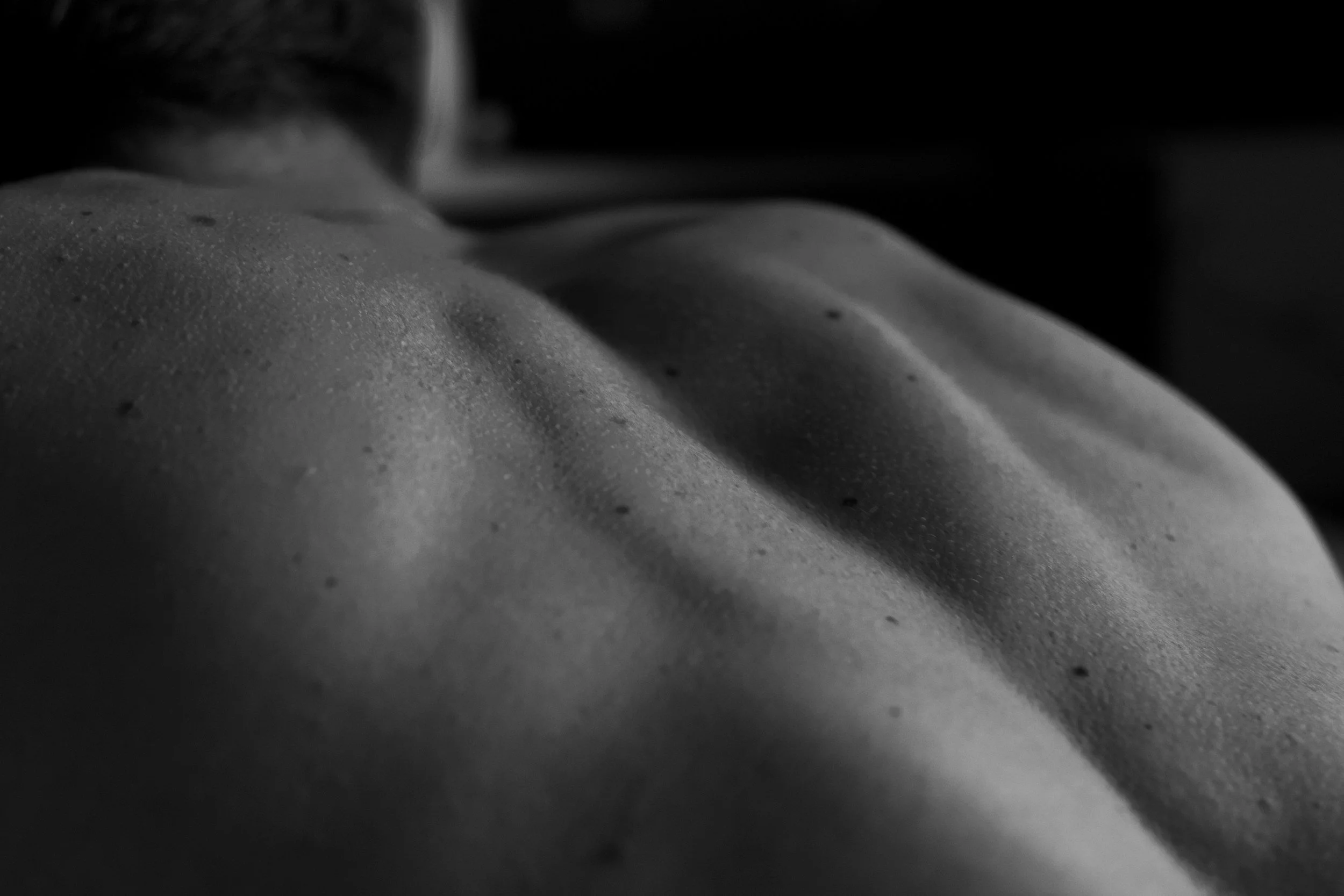
Spinal erectors and deep postural muscles give the body its vertical lift. They make you look taller. More poised. More commanding — without effort.
5. A Defined Back
A strong upper back creates shape, taper, and contour — the subtle V-line that makes the waist look smaller, the shoulders look more refined, and the entire frame look intentional.
Why Posterior Chain Strength Reads as Attractive
This isn't vanity. It's biology.
The human eye is hard-wired to read posture, symmetry, and alignment as signals of health, vitality, and strength. A body that stands tall, moves with ease, and holds itself in balance is universally read as more attractive — not because of any single feature, but because of the harmony of the whole.
Posterior chain dominance creates that harmony.
It's the reason a well-trained body looks expensive even in a plain white t-shirt. It's the reason posture changes the way clothes fit before the body itself does. It's the reason confidence and capability are physically visible — long before you say a word.
Attractiveness, in the deepest sense, is alignment made visible.
MY BACK GOAL MUSE @NATSELEEN_
The Postural Shift That Changes Everything
When you start training the back body, the first thing you notice isn't aesthetic — it's somatic. You feel:
Taller. Your spine decompresses. Your ribs stack over your pelvis.
More grounded. Your feet feel the floor. Your glutes engage when you walk.
More open. Your chest lifts. Your breath deepens. Your shoulders drop.
More powerful. Movement becomes easier. Stairs feel lighter. Standing feels effortless.
And then, slowly, the visual transformation begins. The body starts to organize itself around its new strength. The silhouette refines. The posture holds. Clothes drape differently. People notice — but they can't quite name what's changed.
What's changed is your architecture.
How to Train the Posterior Chain (The Right Way)
Posterior chain training doesn't require heavy lifting or hours in the gym. It requires intention, alignment, and consistency.
Here are the foundational pillars:
1. Isometric Holds
Slow, sustained contractions — like glute bridges held at the top, or wall sits with a posterior-chain focus — build deep, sculpted strength without bulk. These are the bones of refined movement.
2. Hip Hinging
Movements like Romanian deadlifts, good mornings, and hip thrusts teach the body to load through the back chain — strengthening glutes, hamstrings, and spinal erectors in beautiful unison.
3. Pulling Movements
Rows, reverse flys, and pull-aparts strengthen the upper back, opening the chest and reversing the forward collapse of modern life.
4. Posterior-Focused Pilates and Sculpt Work
Slow, controlled, small-range movements that fire the glutes, hamstrings, and back body in the way classical Pilates was designed to — refining the line without bulking the frame.
5. Daily Walking
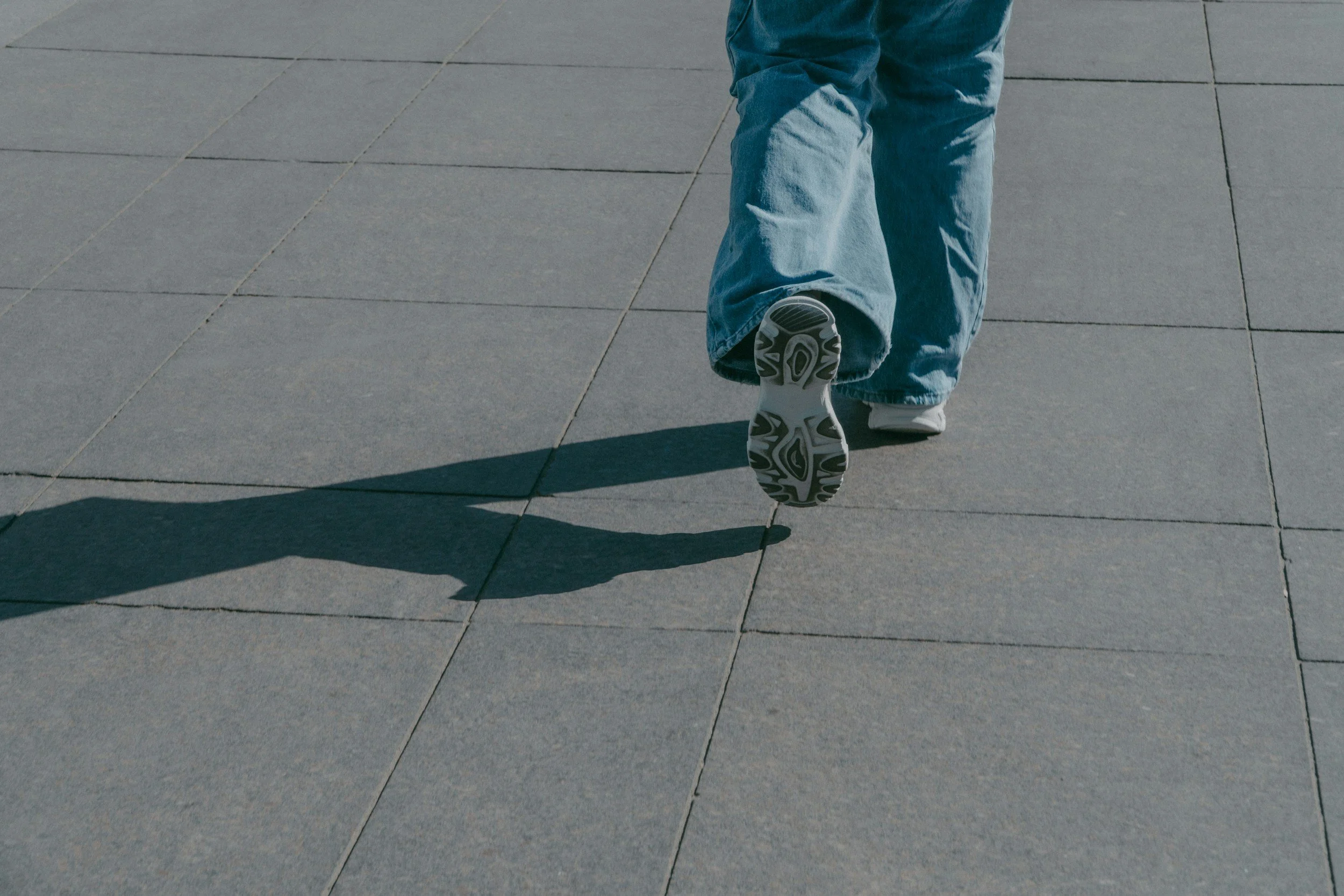
The most underrated posterior chain trainer there is. Walking — especially uphill or at a brisk pace — fires the glutes, hamstrings, and calves with every step. It is, quite literally, the body's natural posterior chain practice.
How I Build My Reformer Sequences Around the Back Body
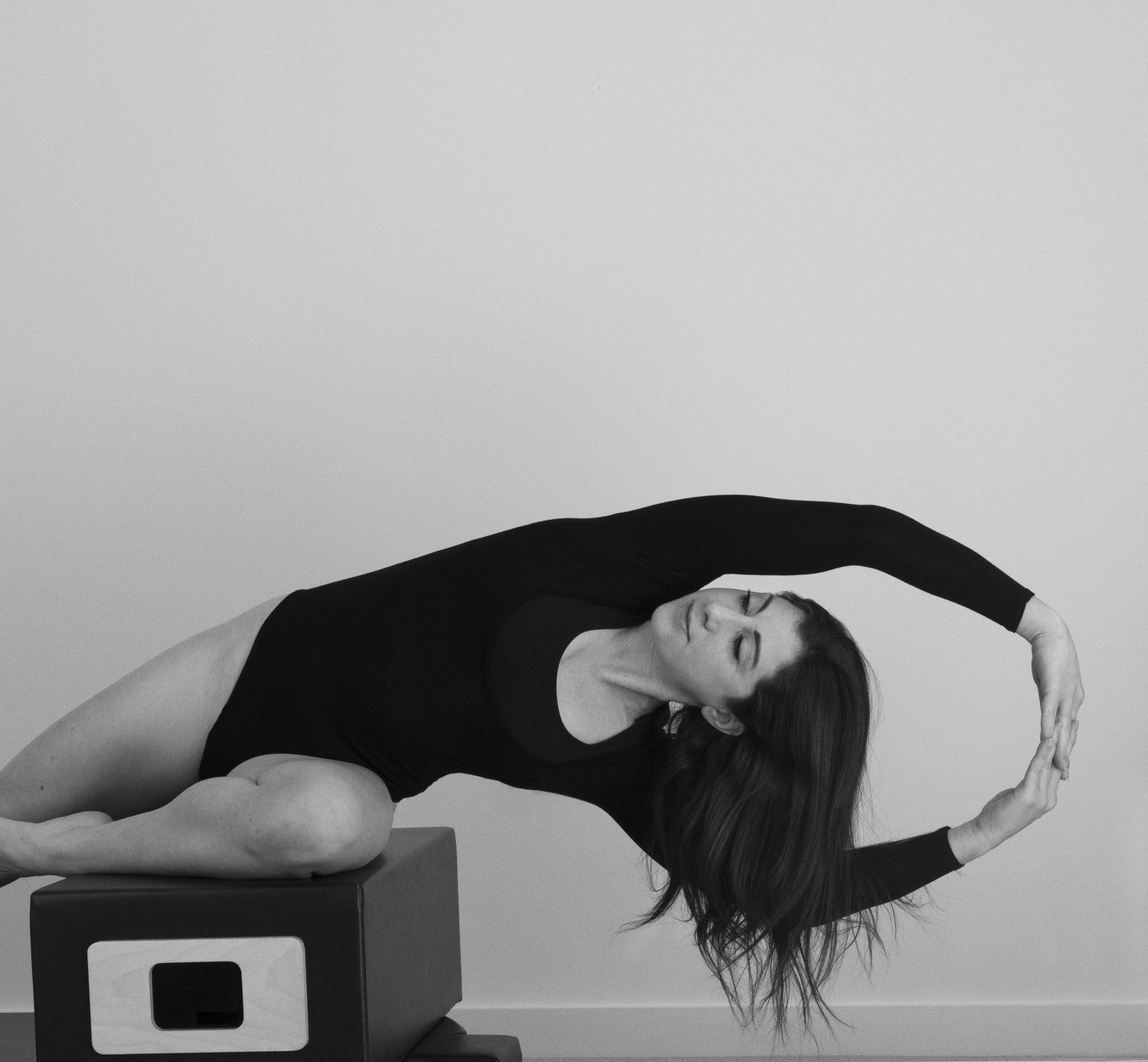
This is the philosophy that shapes every reformer sequence I teach.
When I design a class, I'm not chasing the burn. I'm not building around what looks hard. I'm building around what the body actually needs to undo the patterns of modern life — and what it needs, almost always, is more back body.
Every sequence I create is, at its core, a posterior chain practice in disguise.
Here's how I think about it:
1. I Open with the Spine
Before I load anything, I lengthen everything. Every class begins with spinal articulation — bridging, rolling, mobilising the back body — to wake up the muscles that have been quietly switched off all day. This isn't a warm-up. It's a re-patterning. I'm teaching the body to feel its back side again before I ask it to work.
2. I Build the Glutes Like an Architect
Glutes are the anchor of the entire posterior chain — and the foundation of every sequence I build. I layer them in slowly: bridging variations, feet in straps, kneeling work, standing splits, single-leg loading. Always with intention. Always with slow tempo and full range. I'm not chasing reps — I'm chasing connection.
When the glutes fire properly, everything else falls into place. The hamstrings engage. The spine lengthens. The pelvis stabilises. The body organises itself around its strongest muscle group.
3. I Weave in Hamstrings Like a Thread
Hamstrings are the most under-trained muscle on the back of the body — and the most important for creating that long, lifted, athletic line from glute to knee. I integrate them throughout the sequence: feet in straps, long stretch series, hamstring curls, eccentric loading on the carriage. Slow. Controlled. Lengthening as much as strengthening.
4. I Train the Upper Back in Every Class — Always
This is non-negotiable. Every single sequence I teach includes upper back work — rowing variations, reverse flys, pulling straps, swan prep, breaststroke. Because the upper back is where modern life collapses us forward, and the reformer is one of the most beautiful tools we have to reverse it.
You can't have a strong, lifted physique without a strong, open upper back. Period.
5. I Use Tempo as a Sculpting Tool
The reformer is magic because it lets us train eccentrically — the lengthening phase of every movement, which is where the real sculpting happens. I slow everything down. Three counts down, one count up. Sometimes five counts down. The carriage becomes a resistance partner, not a piece of equipment. The body lengthens under load. That's where the line gets built.
6. I Close with Length, Not Exhaustion
I never end a class with the body wrung out. I end it with the body organised. Long spinal stretches, gentle back extensions, breathwork that opens the chest and resets the nervous system. The goal is for clients to walk out taller, lighter, more upright — not just tired. That's the whole point.
How My Boxing Padwork Trains the Back Body
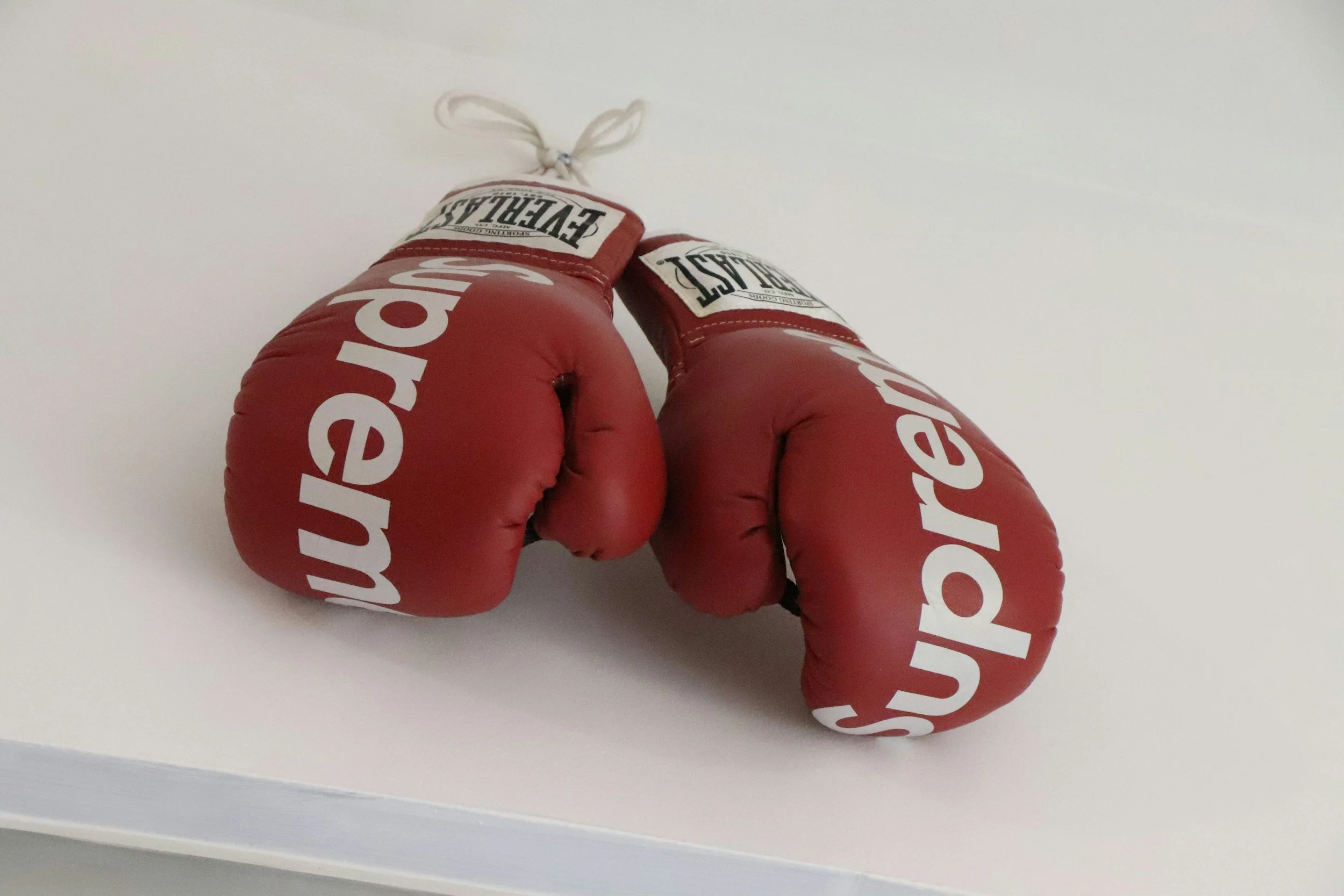
For a long time, I thought of boxing as a separate practice from my Pilates work — something I did for cardio, for power, for the sheer joy of moving fast and hitting hard. But the more I trained, the more I realised something profound:
Boxing, when done properly, is one of the most powerful posterior chain workouts there is.
Every punch you throw — every cross, every hook, every uppercut — originates in the back of the body. The power doesn't come from the arm. It comes from the glutes, the hips, the spinal rotators, the lats. The arm is just the delivery system. The engine is the back chain.
That's why I now treat my padwork sessions as a non-negotiable part of how I train the body for strength, sculpt, and athletic dimension.
Here's how I structure them with posterior chain dominance in mind:
1. I Root Through the Back Foot
Every punch begins in the ground. I drive through the back foot, glute, and hip — letting the rotational power travel up through the kinetic chain and out through the fist. The arm is the last thing to fire. When I cue myself this way, the glutes work harder than the shoulders. That's the whole secret.
2. I Rotate from the Spine, Not the Arm
Power in boxing comes from rotational force — the ability to twist through the spine and hips with control and speed. I focus on rotating through the thoracic spine and obliques, engaging the deep back muscles that wrap around the torso. This builds definition through the waist, the upper back, and the rear shoulders in a way no isolation exercise can.
3. I Hold a Tall, Lifted Posture
A strong boxing stance is, by definition, a posterior chain stance. Chin tucked, shoulders down, lats engaged, spine long. I'm not collapsing forward — I'm holding myself upright and loaded, the entire back body switched on. Every round becomes a postural drill in disguise.
4. I Use Padwork as Conditioning for the Glutes and Hamstrings
The footwork alone — the shuffling, pivoting, sliding, ducking — is essentially a continuous low-impact posterior chain workout. The glutes fire with every step. The hamstrings stabilise every pivot. The calves explode through every push-off. Three rounds of padwork lights up the back body the way few other workouts can.
5. I Train Power Without Bulk
This is the part I love most. Boxing builds dense, athletic, refined muscle — not bulk. The repeated rotational power, the explosive push-offs, the sustained postural engagement create a body that's lean, strong, and dynamic in a way Pilates alone can't quite deliver. It's the perfect counterpart to the slow, controlled work on the reformer.
The Pairing That Changes Everything
Pilates sculpts. Boxing powers. Together, they create a body that is both refined and explosive — long lines with athletic dimension, controlled strength with reactive power, elegance with edge.
That pairing — slow, sustained eccentric work paired with fast, rotational, posterior-driven movement — is what builds the kind of body that doesn't just look strong, but moves strong.
The reformer builds the architecture. The bag brings it to life.
When the Body Flares: A Note on Training Through Sensitivity
Here's something I tell my clients often — and something I wish more women heard:
If your knees, hips, or back flare up, it's not a sign to stop training. It's a sign to train smarter.
Pain and flare-ups aren't usually a strength problem. They're a force distribution problem. The body is telling you that load is landing in the wrong places — that the deeper stabilisers aren't switching on, that the bigger muscles are compensating, that something in the chain is asking for support.
The answer isn't to push through. It's not to stop entirely either. It's to shift the way you're loading.
Here's what I turn to — for myself and my clients — when something starts to flare:
1. Isometric Holds
When a joint is irritated, the last thing it needs is repetitive movement under load. Isometrics — sustained contractions without movement — let you build strength in the exact position the body needs without aggravating the joint.
A glute bridge held at the top. A wall sit at a tolerable angle. A plank with intention. The muscle works. The joint rests. The body gets stronger without inflammation.
Isometrics are one of the most underrated tools in rehab — and one of the most powerful ways to build deep, stabilizing strength.
2. Eccentric Loading
The eccentric phase — the lengthening under load — is where the body builds resilience. It's where tendons strengthen. It's where stabilizers wake up. It's where the body learns to absorb force rather than collapse under it.
When something flares, I shift my focus toward the slow, controlled lowering phase of every movement. Three counts down. Five counts down. Sometimes only the eccentric, with assistance on the way back up. The muscle gets stronger. The joint gets quieter. The pattern gets cleaner.
3. Cleaner Force Distribution
Most flare-ups are the result of one thing: the body recruiting the wrong muscles for the job. Knees flare when glutes aren't firing. Hips flare when the core is disengaged. Backs flare when the posterior chain is offline and everything compensates upward.
The fix isn't more strength. It's better recruitment.
I slow everything down. I cue smaller. I drop the load and rebuild the pattern from the ground up — feet grounded, pelvis neutral, ribs stacked, glutes leading. When the force distributes properly, the flare-up almost always resolves itself.
The Bigger Lesson
The body is always communicating. Flare-ups aren't failures — they're feedback. They're the body asking for better movement, not less movement.
Some of my strongest, most sculpted progress has come from seasons where I had to slow down, simplify, and rebuild from the foundation. Isometrics. Eccentrics. Cleaner cueing. Less ego, more intelligence.
The body doesn't need you to be harder on it. It needs you to listen.
That's how you train for decades — not just for a season.
A Note on Aesthetics Vs. Function
It's tempting to chase posterior chain training for the look alone. And yes — the look follows. But the deeper gift is this:
A strong back body is the body's defense against time.
It protects the spine. It prevents the forward collapse of aging. It supports the pelvic floor. It keeps the body upright, mobile, and capable for decades. The aesthetic is a byproduct of something much more profound: a body that's been built to last.
That's the real definition of beauty. Not symmetry alone. Not youth alone. But a body in alignment with itself.
The Body You're Building
When you train the posterior chain, you're not just sculpting muscle. You're rebuilding the architecture of how you move through the world.
You're trading collapse for lift. Compression for length. Slump for stature.
You're building a body that doesn't just look strong — but is strong. A body that stands tall in a doorway. That walks with quiet command. That holds itself with the elegance of something well-built and well-cared-for.
That's the kind of beauty that doesn't fade.
That's the kind of body that reads as magnetic before you ever say a word.
Train the body you don't see. It's the one the world will.
With strength behind you,
Azyan
The perfect tune for this post ↑